
Picture this: Your dream of running a small business has come true. You’re passionate, driven, and ready to make your mark. But have you considered how to safeguard your investment? Enter the world of small business insurance coverage options—a vital yet often overlooked aspect of business ownership.
Insurance might not be the most glamorous part of running a business, but it is the silent guardian that stands between you and potential financial disasters. With the right coverage, you’re not just protecting your assets; you’re empowering your dreams. Let’s delve into the world of insurance that keeps your enterprise thriving, no matter what challenges come your way.
Understanding Small Business Insurance Coverage
Navigating the world of insurance can be a daunting task for small business owners. With a variety of coverage options available, it’s essential to understand which types best suit your business needs.
Having the right insurance coverage can safeguard your business from unexpected financial burdens. From liability to property insurance, each type plays a crucial role in protecting your investments and ensuring your business’s longevity.
Types of Insurance Coverage for Small Businesses
Small businesses have access to a range of insurance policies designed to cover different risks and exposures. Let’s dive into some of the most common options:
- General Liability Insurance
- Professional Liability Insurance
- Property Insurance
- Workers’ Compensation Insurance
General Liability Insurance shields your business from claims related to bodily injury, property damage, and advertising injury. Meanwhile, Professional Liability Insurance, also known as Errors and Omissions Insurance, is crucial for service-based businesses, protecting against claims of negligence or inadequate work.
Importance of Liability Insurance for Small Businesses
Liability insurance is a must-have for small businesses. It acts as a financial safety net, covering legal fees and potential settlements. Without it, a single lawsuit could be detrimental to your company’s finances.
“In today’s litigious society, liability insurance is not a luxury—it’s a necessity.”
General Liability vs. Professional Liability Insurance
While both provide a layer of protection, they serve different purposes. Understanding these differences can help in selecting the right coverage:
| Type of Insurance | Coverage Focus |
|---|---|
| General Liability | Covers physical risks and damages |
| Professional Liability | Covers service-related errors or negligence |
By carefully choosing the right insurance, you can ensure your small business remains protected from various unforeseen risks.
Evaluating Risks for Small Businesses
Running a small business is like navigating a ship through unpredictable waters—there are always risks on the horizon. To safeguard your enterprise, understanding and managing these risks is crucial.
Identifying potential threats and aligning them with appropriate insurance coverage can be the difference between smooth sailing and a capsized venture.
Identifying Potential Risks and Insurance Mitigation
Small businesses are vulnerable to a myriad of risks, ranging from natural disasters to employee injuries. The key to mitigating these threats lies in an effective insurance strategy. Insurance acts as a protective shield that absorbs financial shocks and ensures business continuity. From property damage to liability lawsuits, the right policy can safeguard your assets and provide peace of mind.
Consider the risks unique to your industry. For instance, a retail store faces different threats compared to a tech startup. Each industry requires a tailored approach to risk management.
Industry-Specific Risk Factors and Insurance Needs
Different industries face distinct risks that demand customized insurance solutions. Understanding these specific threats can help you prepare and protect your business effectively.
- Retail Industry: Theft, property damage, liability claims.
- Hospitality Sector: Guest injuries, property loss, liquor liability.
- Technology Firms: Cyber threats, intellectual property disputes, data breaches.
Aligning these risks with appropriate coverage is essential. Here’s a list of potential risks and the corresponding insurance coverage:
| Industry | Potential Risks | Recommended Insurance |
|---|---|---|
| Retail | Theft, Fire Damage | Commercial Property, General Liability |
| Hospitality | Guest Injuries, Food Contamination | Public Liability, Product Liability |
| Technology | Data Breaches, IP Infringement | Cyber Liability, Professional Indemnity |
The Role of Risk Assessment in Coverage Needs
Risk assessment involves analyzing potential hazards and their impact on your business. This process is pivotal in determining the type and extent of insurance coverage required. By conducting a thorough risk assessment, you can:
“Identify vulnerabilities before they become costly problems.”
Insurance providers often assist in this assessment, offering tailored advice to ensure your coverage aligns with your specific needs. This proactive approach not only protects your business but also optimizes your insurance spend.
Customizing Insurance Plans
Every small business is distinct, much like the fingerprints of their passionate entrepreneurs. Crafting an insurance plan tailored to your unique needs can be the difference between surviving a storm and thriving through it.
Understanding the specific vulnerabilities and strengths of your business is key to customizing an insurance plan that fits like a glove. This involves a careful review of not just what you own and operate, but also the industry you serve and the potential risks involved.
Building Your Perfect Insurance Checklist
Creating a tailored insurance plan starts with a comprehensive checklist to ensure every facet of your business is protected. Here’s a detailed guide to help you evaluate the coverage options that align with your business size and industry:
- Evaluate Business Assets: Identify tangible and intangible assets that need coverage.
- Consider Industry-Specific Risks: What are the common risks associated with your industry?
- Assess Employee Needs: Factor in workers’ compensation and health coverage.
- Review Legal Requirements: Check for any mandatory insurance dictated by state laws or industry regulations.
- Analyze Business Operations: Understand how day-to-day operations influence your risk exposure.
Negotiating Your Insurance Terms
Negotiating terms can often feel like a strategic chess game, but it can yield significant benefits for small businesses. Here are some methods to help you navigate the negotiation process effectively:
“In the realm of insurance, every term is negotiable, and understanding your leverage is key.”
To start, always gather multiple quotes to better understand the market range for your desired coverage. This provides a solid foundation to negotiate from. Discuss coverage limits and explore the possibilities of bundling policies to receive discounts. It’s also wise to consider higher deductibles to lower premium costs while ensuring you’re not overexposed to risk. Remember to ask about loyalty benefits or discounts for safety measures your business has implemented. Building a relationship with your insurance provider can open doors to bespoke policy adjustments.
Cost Factors and Budgeting for Insurance
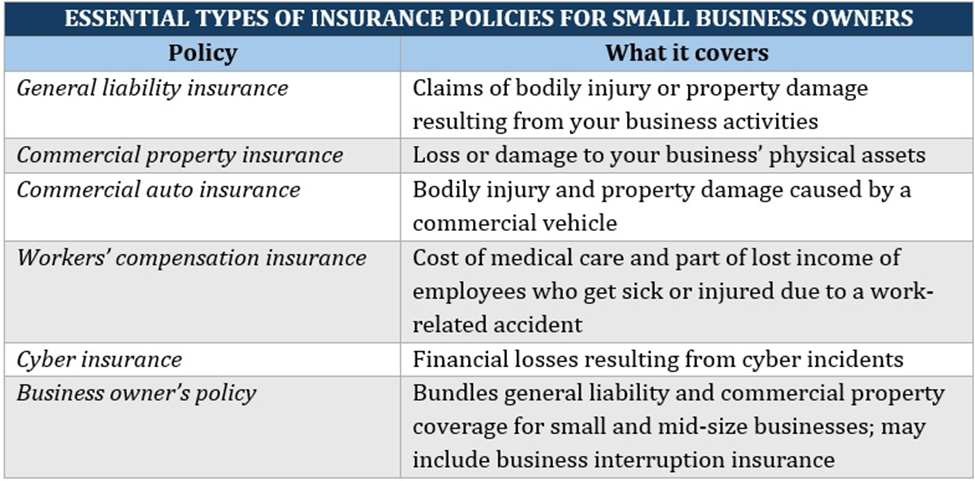
When it comes to protecting your small business, understanding the cost factors and budgeting for insurance is crucial. The right coverage can safeguard your assets while fitting into your financial plan.
Every small business has unique needs, and insurance costs can vary widely based on industry, size, and location. By exploring and comparing these costs, you can ensure your business is both secure and financially sound.
Comparing Insurance Coverage Costs
Insurance costs hinge on multiple factors, including the nature of your business, the number of employees, and potential risks. It’s vital to compare different policies and select one that balances coverage with affordability. Here’s a look at the average costs for various types of businesses:
| Business Type | Average Annual Cost (Small Business) | Average Annual Cost (Medium Business) |
|---|---|---|
| Retail Store | $500 – $1,200 | $1,500 – $3,000 |
| IT Consulting | $300 – $800 | $1,000 – $2,500 |
| Restaurant | $1,000 – $2,500 | $3,000 – $5,000 |
| Construction | $1,500 – $3,500 | $4,000 – $7,500 |
Effective Budgeting and Management Strategies
Crafting a financial plan for insurance is more than just cost analysis; it involves strategic budgeting to ensure that your business remains protected without stretching its finances. Consider the following strategies:
- Conduct a thorough risk assessment to identify necessary coverage areas.
- Bundle policies to potentially save on premiums through multi-policy discounts.
- Regularly review and adjust your coverage as your business grows or changes.
- Set aside a dedicated budget for unforeseen insurance-related expenses.
- Stay informed about industry trends and potential cost-saving measures.
“The best insurance policy for your small business is the one that best fits your unique needs and budget.”
Legal Requirements and Compliance
Navigating the labyrinth of legal requirements for small business insurance can feel daunting, but it’s a crucial step to protect your enterprise’s future. Understanding these obligations not only safeguards your business but also shields you from costly penalties.
Each region has its own set of regulations that dictate the type and extent of insurance coverage a small business must maintain. Falling short of these requirements can lead to severe repercussions, including fines, business suspension, or even the dissolution of your company. Therefore, a thorough understanding and adherence to these laws is not only smart—it’s necessary.
Regional Insurance Mandates
Across different regions, small businesses face varying insurance requirements. In the United States, for example, most states mandate workers’ compensation insurance if you have employees. Some regions demand general liability insurance, especially if your business operates in industries prone to lawsuits. Meanwhile, Canada’s provinces may require businesses to have commercial auto insurance for any vehicles used for business purposes. Europe, on the other hand, often emphasizes the need for public liability insurance.
To remain compliant, it’s essential to consult with local regulatory bodies or legal experts who can provide precise information about your area’s specific requirements. This proactive approach will help you avoid the consequences of non-compliance, which can range from financial penalties to a tarnished reputation.
Consequences of Non-Compliance
The consequences of failing to meet insurance regulations are severe and can cripple a small business. Imagine facing a hefty fine that could have been easily avoided by securing the right coverage. Non-compliance can also lead to license revocation, preventing you from legally operating your business. Furthermore, in the event of a claim, lacking the mandated insurance can result in substantial out-of-pocket expenses, potentially leading to bankruptcy.
“Compliance is not just a legal obligation, but a commitment to your business’s sustainability.”
Ensuring Compliance with Legal Standards
To ensure your business insurance policies meet legal standards, start by conducting a comprehensive review of your current coverage. Here’s a guideline to help you navigate this process:
- Consult with an insurance expert familiar with your industry and region.
- Regularly review and update your policies as laws and business operations evolve.
- Utilize compliance checklists provided by local business associations.
- Attend workshops or seminars on legal compliance for the latest updates.
- Maintain detailed records of your insurance policies and any changes made.
By following these steps, you can ensure your business remains compliant, thus avoiding unnecessary legal entanglements and focusing on growth and success.
Trends and Innovations in Small Business Insurance
In the ever-evolving world of small business insurance, staying ahead of the curve is essential for businesses aiming to protect their assets effectively. Recent trends and innovations are reshaping the landscape, making it crucial for business owners to stay informed.
Let’s explore some of the groundbreaking trends and technological advancements that are transforming the way insurance is delivered and managed, offering both challenges and opportunities for small business owners.
Emerging Trends in Small Business Insurance
The small business insurance sector is witnessing a transformation driven by new trends. The rise of usage-based insurance is one such trend, allowing businesses to pay premiums based on actual usage, providing a more tailored and cost-effective solution. Moreover, the increase in cyber insurance offerings is a response to the growing threat of cyberattacks, catering to the need for digital protection in an increasingly online world.
Innovative Delivery and Management of Insurance
Technological advancements are revolutionizing how insurance is offered and managed. The use of artificial intelligence and machine learning is streamlining the underwriting process, making it faster and more accurate. This innovation allows for personalized policies that better fit the unique needs of small businesses. Additionally, blockchain technology is enhancing transparency and security in insurance transactions, building trust between insurers and policyholders.
Technology-Driven Insurance Solutions
Technology is not only changing the products available but also how small businesses interact with insurance providers. Mobile apps and digital platforms offer user-friendly interfaces that simplify the insurance process, from obtaining quotes to filing claims. These platforms empower business owners with immediate access to their coverage details and enable real-time communication with their insurers. Furthermore, the integration of Internet of Things (IoT) devices is providing businesses with data-driven insights that can inform risk management strategies and potentially lower premiums.
Summary
In the ever-evolving landscape of business, one thing remains constant: the need for robust protection. With the right small business insurance coverage, you’re not only safeguarding what you’ve built but also paving the way for future growth. So, why wait? Secure the shield that lets your business flourish with confidence and resilience. Now’s the time to turn potential risks into opportunities for success.

