
Imagine a world where you can navigate the bustling roads of Massachusetts with confidence, knowing that your vehicle is protected by the best insurance plan that fits your budget. The average cost of auto insurance in Massachusetts doesn’t have to be a mystery. With the right knowledge and guidance, you can uncover the secrets to securing the most suitable insurance coverage without breaking the bank.
In this guide, we’re going to explore everything from the main factors influencing insurance costs in the Bay State to the top providers offering competitive rates. Prepare to embark on a journey where informed decisions lead to significant savings, making your driving experience as seamless as possible.
Average Cost Factors
When it comes to understanding the average cost of auto insurance in Massachusetts, several key components come into play. These factors not only shape the premiums you pay but also distinguish Massachusetts from other states in the insurance landscape.
Massachusetts, with its unique regulatory environment and demographic characteristics, exhibits distinct differences in how certain factors impact insurance costs compared to other states. Let’s delve into these influential elements.
Factors Influencing Auto Insurance Costs
In Massachusetts, the average cost of auto insurance is primarily shaped by a variety of factors. These include the driver’s age, driving history, type of vehicle, and even the specific area where the vehicle is garaged. Each factor carries its own weight, and understanding these can empower you to navigate the insurance landscape more effectively.
| Factor | Description | Impact on Cost |
|---|---|---|
| Age of Driver | Younger drivers typically face higher premiums due to less driving experience. | High |
| Driving History | A record free of accidents or violations lowers the risk, thereby reducing costs. | Moderate to High |
| Type of Vehicle | Luxury and sports cars generally incur higher premiums due to expensive repair costs. | Moderate |
| Location | Urban areas with higher traffic congestion typically have higher insurance rates. | High |
Comparing Massachusetts to Other States
Massachusetts’ landscape for auto insurance is distinct from many other states, primarily due to its no-fault insurance system and stringent regulatory policies. This can often lead to comparatively higher base rates. However, these structures also provide more comprehensive protection, which is a critical consideration for many drivers.
For instance, while some states may prioritize factors such as mileage or commute distance, Massachusetts places a stronger emphasis on driving history and location. This focus results in a unique set of premiums that reflect the state’s urban density and traffic challenges.
“Understanding these factors can provide you with the insights needed to make informed decisions about your auto insurance in Massachusetts.”
Insurance Providers and Rates
Finding the right auto insurance provider can feel like navigating a maze, but with the right information, you can chart a course toward savings and peace of mind. In Massachusetts, the variety of providers and their rates reflect a landscape full of choices for the savvy shopper.
Understanding which providers offer the best rates and special features can simplify your decision-making process, enabling you to choose a provider that not only fits your budget but also meets your unique needs.
Exploring Top Auto Insurance Providers in Massachusetts
Massachusetts is home to a myriad of auto insurance companies, each vying for your attention with their unique offerings. Some of the top names in the industry include giants like GEICO, Progressive, and Allstate. These companies, along with local favorites like Plymouth Rock Assurance and Arbella Insurance, provide a spectrum of rates designed to cater to various drivers, from the budget-conscious to those seeking premium coverage.
The range of rates offered by these providers can vary greatly, depending on factors like age, driving history, and the type of vehicle insured. For instance, a young driver driving a sports car might face a higher premium compared to a seasoned driver with a clean record driving a sedan.
Comparing Provider Rates and Features
To help you compare these providers more effectively, take a look at the table below. It artikels the minimum and maximum rates offered by each provider, along with any special features that might sway your decision:
| Provider Name | Minimum Rate | Maximum Rate | Special Features |
|---|---|---|---|
| GEICO | $800 | $2,500 | Multi-policy discounts, 24/7 customer service |
| Progressive | $850 | $2,700 | Snapshot program, accident forgiveness |
| Allstate | $900 | $2,800 | Claim satisfaction guarantee, new car replacement |
| Plymouth Rock | $950 | $3,000 | Door-to-door valet claim service, loyalty rewards |
| Arbella | $920 | $2,950 | Green discount, accident forgiveness |
“Choosing the right auto insurance is not just about the price—it’s about finding a policy that offers value through its features and services.”
With these insights, you’re equipped to make an informed decision, selecting a provider that not only protects your vehicle but also offers you the coverage and support you deserve.
Types of Coverage
When it comes to auto insurance in Massachusetts, the spectrum of coverage types can sometimes feel like navigating a labyrinth. It’s important to understand each type of coverage to make informed decisions that best fit your needs and budget.
Different coverage types not only protect you against various risks but also come with their own price tags. Let’s delve into the world of auto insurance coverages available in Massachusetts and explore their costs to help you make the most of your insurance plan.
Exploring Coverage Options and Their Costs
In Massachusetts, auto insurance policies are designed to cater to a wide range of protection needs. The key is to know what each coverage type offers and how much it typically costs. Here’s a breakdown of the major coverage types:
- Liability Coverage: This is mandatory in Massachusetts and covers bodily injury and property damage.
The average cost is around $600 per year.
- Collision Coverage: Helps cover the cost to repair or replace your car after an accident.
Expect to pay an average of $300 annually.
- Comprehensive Coverage: This covers damage from non-collision events like theft or natural disasters.
The average cost is about $200 per year.
- Personal Injury Protection (PIP): Covers medical expenses and lost wages regardless of who is at fault.
Typically costs around $100 annually.
- Uninsured/Underinsured Motorist Coverage: Protects you if you’re hit by a driver with little or no insurance.
Average cost is approximately $150 per year.
Here’s a quick comparison of average costs for the different types of coverage:
| Coverage Type | Average Cost (per year) |
|---|---|
| Liability | $600 |
| Collision | $300 |
| Comprehensive | $200 |
| Personal Injury Protection (PIP) | $100 |
| Uninsured/Underinsured Motorist | $150 |
Understanding the costs and benefits associated with each coverage type can guide you towards a policy that not only complies with state requirements but also provides the protection you need.
Regional Variations
Auto insurance costs in Massachusetts can feel like a rollercoaster ride; they vary significantly from one town to another. Understanding these regional differences empowers you to make informed decisions about your insurance needs.
Various factors, such as population density, crime rates, and local driving conditions, contribute to the disparities in auto insurance costs across different regions in Massachusetts. By delving into these elements, we will uncover the underlying reasons for these fluctuations and offer insights into how they impact your wallet.
Understanding Regional Disparities in Auto Insurance Costs
When it comes to auto insurance premiums, where you live in Massachusetts can have a substantial impact. Urban areas like Boston tend to have higher rates due to increased traffic congestion and higher accident rates. Conversely, rural regions may benefit from lower costs, thanks to less traffic and fewer claims. The following table provides a snapshot of how these costs differ:
| Region | Average Cost | Key Influencing Factors |
|---|---|---|
| Boston | $1,800 | High traffic, urban density, crime rates |
| Springfield | $1,500 | Mid-sized city, moderate traffic |
| Worcester | $1,400 | Urban area, varying traffic conditions |
| Cape Cod | $1,200 | Rural, seasonal traffic fluctuations |
| Berkshire County | $1,100 | Rural, low traffic, fewer claims |
As highlighted, location plays a pivotal role in determining your auto insurance premium. In bustling cities like Boston, the risk of accidents and theft is higher, pushing premiums upwards. Meanwhile, quieter areas such as Cape Cod and Berkshire County offer a reprieve with lower costs. Understanding these regional dynamics allows you to navigate the insurance landscape with confidence.
Cost-Saving Tips
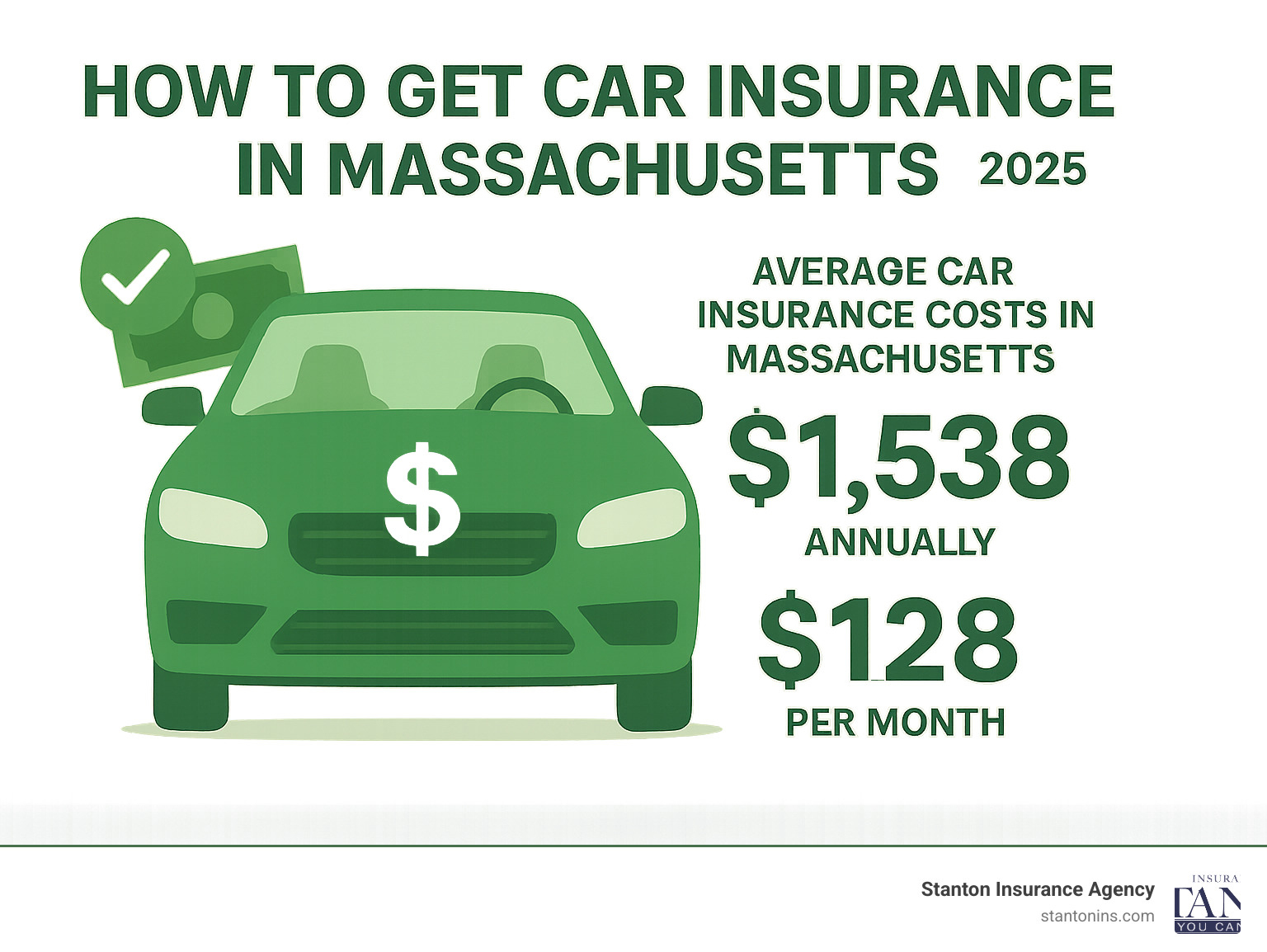
Car insurance in Massachusetts doesn’t have to break the bank. By adopting thoughtful strategies, you can keep your premiums down while maintaining the coverage you need.
Whether you’re a seasoned driver or new to the roads, understanding the various ways to save on your auto insurance can lead to significant financial benefits. Here’s how you can make the most of your policy without compromising on quality.
Bundle Your Policies
Combining your auto insurance with other types of insurance, like homeowners or renters insurance, can lead to substantial discounts.
- Benefit: Enjoy the convenience of dealing with one insurer for multiple policies.
- Drawback: Ensure that bundling doesn’t limit your options in case better deals are available separately.
Choose a Higher Deductible
Opting for a higher deductible can significantly lower your monthly premium payments, although it means more out-of-pocket expense in the event of a claim.
- Benefit: Reduced premium rates can lead to long-term savings.
- Drawback: Be prepared to cover more upfront costs if an accident occurs.
Maintain a Clean Driving Record
Your driving history is a critical factor in determining your insurance rates. A solid, incident-free record can earn you better rates over time.
- Benefit: Safe drivers are often rewarded with lower rates and additional discounts.
- Drawback: One mistake can tarnish your record, affecting your rates for years.
Utilize Low-Mileage Discounts
If you drive less than the average number of miles per year, you may qualify for a low-mileage discount, rewarding you for reducing the risk of accidents and wear.
- Benefit: This is a great option for those who use their car sparingly.
- Drawback: Those who need to drive frequently may not benefit from this discount.
Leverage Technology and Telematics
Many insurers offer discounts for participating in telematics programs, which monitor your driving habits through a mobile app or a device installed in your car.
- Benefit: Gain personalized insights into your driving and potential premium reductions.
- Drawback: Concerns over privacy and data use may be a consideration for some drivers.
“The keys to saving on auto insurance lie in understanding your options and making informed choices that suit your lifestyle and budget.”
Historical Trends
Over the last ten years, the landscape of auto insurance costs in Massachusetts has been anything but static. This dynamic environment reflects a myriad of influences ranging from economic changes to legislative shifts.
Understanding these trends can provide valuable insights for drivers who want to anticipate future costs and make informed decisions.
Decade of Flux: Shifts in Insurance Costs
The last decade has seen significant changes in the way auto insurance rates are calculated in Massachusetts. One of the most notable trends has been the steady increase in premiums, a pattern that is partially driven by the rising costs of vehicle repair and medical expenses. In addition, the state has seen shifts in regulatory policies which have impacted the overall structure and competition within the auto insurance market.
Another factor contributing to these changes is the introduction of new technologies and safety features in vehicles, which have altered risk assessments and, consequently, insurance premiums. Furthermore, economic fluctuations and inflation have played a role in adjusting the average cost, thereby leading to peaks and troughs throughout the decade.
Below is a detailed table that chronicles these changes year by year, providing a snapshot of how the average cost of auto insurance has evolved:
| Year | Average Cost | Notable Trends |
|---|---|---|
| 2013 | $1,200 | Cost stability, minor increases. |
| 2014 | $1,250 | Introduction of stricter regulations. |
| 2015 | $1,300 | Rise due to increased repair costs. |
| 2016 | $1,350 | Technological advancements in cars. |
| 2017 | $1,400 | Shift towards competitive pricing. |
| 2018 | $1,450 | Impact of natural disasters. |
| 2019 | $1,480 | Increased regulatory costs. |
| 2020 | $1,500 | COVID-19 pandemic effects. |
| 2021 | $1,530 | Economic recovery and adjustments. |
| 2022 | $1,600 | Inflationary pressures. |
| 2023 | $1,650 | Stabilization and moderate growth. |
These trends illustrate a decade marked by progressive changes that reflect broader economic and technological developments. As Massachusetts continues to adapt to new challenges and opportunities, staying informed of these historical patterns will be key for consumers seeking to navigate the ever-evolving auto insurance market.
Conclusion
In the ever-evolving landscape of auto insurance, staying informed is your best ally. By understanding the nuances of the average cost of auto insurance in Massachusetts, you are empowered to make choices that benefit both your wallet and peace of mind. Embrace this newfound knowledge, apply the cost-saving strategies, and drive with the confidence that you are not only protected but also financially savvy. Here’s to smarter choices and safer journeys!

