
Imagine a safety net that catches your small business whenever unforeseen chaos strikes. That’s the magic of having the right insurance in place. In a world that can sometimes feel unpredictable, knowing that your business is protected can be the game-changer you need.
Embark on a journey with us as we unravel the world of essential small business insurance types. Our goal is to empower you with the knowledge to safeguard your dreams, ensuring that your business is not only protected but poised for success in the face of any challenge.
Understanding General Liability Insurance
Imagine owning a small business without the stress of unforeseen mishaps draining your resources. That’s the peace of mind general liability insurance offers.
General liability insurance is a crucial safety net for small business owners, covering costs associated with accidents, injuries, and negligence claims. It serves as a financial guardian, protecting your business from legal and compensation expenses that could otherwise jeopardize your operation.
Typical Incidents Covered by General Liability Insurance
Whether it’s a slip-and-fall accident in your store or damage caused by your service, general liability insurance steps in to handle the financial fallout. For example, if a visitor trips over a loose carpet in your shop and suffers an injury, the costs related to medical expenses and legal fees could be covered by your policy.
- Claims from bodily injuries occurring on your premises.
- Damage caused to someone else’s property by your business operations.
- Personal injury claims like libel and slander.
Significance Across Various Small Business Industries
The importance of general liability insurance cannot be understated across diverse sectors. In retail, it safeguards against customer accidents. For consultants and freelancers, it defends against claims of professional negligence. Construction businesses rely on it to cover property damages.
Protecting your business is not just an option; it’s a necessity.
Comparative Analysis of Costs and Coverage
The cost of general liability insurance varies based on business size and risk exposure. Here’s a comparison to help you understand the investment required:
| Business Size | Approximate Annual Cost | Coverage Details |
|---|---|---|
| Solo Entrepreneur | $500 – $1,200 | Basic coverage for sole operations, including slip-and-fall incidents. |
| Small Retail Store | $750 – $2,000 | Enhanced coverage for product liability and customer injuries. |
| Medium-sized Service Provider | $1,500 – $3,500 | Comprehensive plan covering property damage and negligence claims. |
Importance of Property Insurance
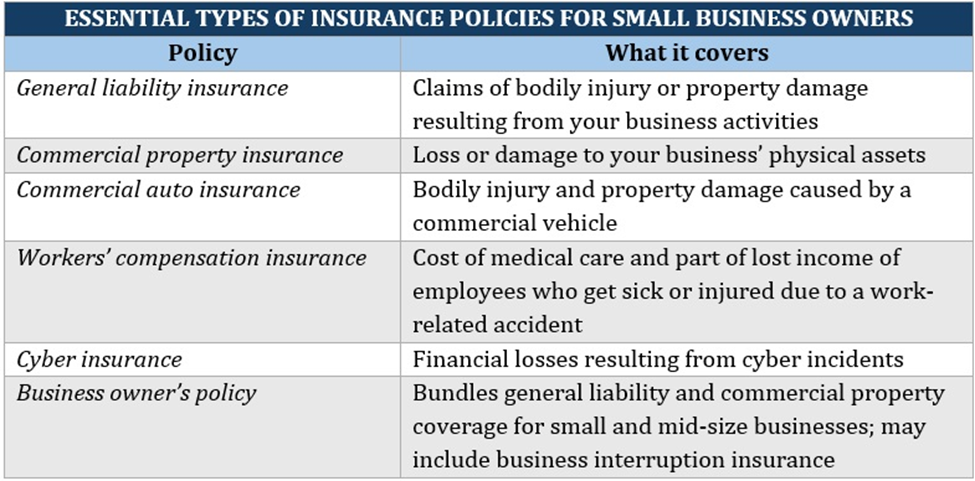
Imagine waking up one morning to find that your business premises have been severely damaged by an unforeseen event. The cost of repair and recovery could be astronomical, potentially crippling your business. This is where property insurance becomes an essential safeguard for any small business owner.
Property insurance is your financial safety net, covering the buildings and contents of your business from risks such as fire, theft, or natural disasters. It’s not just about protecting physical assets; it’s about ensuring the continuity of your business operations when the unexpected occurs.
Types of Property Insurance Available for Small Businesses
There are various types of property insurance tailored to meet the diverse needs of small businesses. Understanding which type best suits your business can make a significant difference in your risk management strategy.
- Building Insurance: Covers the physical structure of your business property.
- Contents Insurance: Protects the movable assets within your premises, like furniture and equipment.
- Business Interruption Insurance: Covers lost income if your business operations are halted due to a covered event.
- Equipment Breakdown Insurance: Focuses on the repair or replacement of essential machinery and equipment.
- Flood Insurance: Provides specific coverage against flood-related damages, which are often excluded from standard policies.
Scenarios Where Property Insurance is Essential
Consider these realistic scenarios where having property insurance could save your business from significant losses:
- A fire breaks out overnight, damaging your entire office space. With building insurance, repair costs are covered, ensuring you can rebuild and resume operations swiftly.
- A burst pipe floods your retail store, ruining merchandise and damaging electronics. Contents insurance ensures that replacements are funded without depleting your reserves.
- Severe storms force your business to close temporarily. With business interruption insurance, your lost income is compensated, so you can focus on recovery rather than worrying about revenue loss.
Advantages of Property Insurance
Having property insurance brings numerous advantages, offering peace of mind and financial security:
- Protection against financial losses due to damage or theft.
- Ensures quick recovery and business continuity.
- Boosts credibility with partners and clients by demonstrating risk management.
- Potential savings through bundled packages or tailored coverage options.
- May fulfill lender or lease agreement requirements.
Property Insurance Packages and Their Benefits
To better understand the options available, here is a comparison of typical property insurance packages and the benefits they offer:
| Package | Coverage | Benefits |
|---|---|---|
| Basic Protection | Building and Contents | Affordable, essential coverage for start-ups and small offices. |
| Comprehensive Plan | Building, Contents, and Business Interruption | Ideal for established businesses seeking extensive risk mitigation. |
| Customizable Package | Tailored Coverage Options | Flexibility to choose specific add-ons like Equipment Breakdown. |
| High-Risk Area Policy | Includes Flood and Earthquake Insurance | Specific for businesses located in high-risk zones. |
Insurance is not just a policy; it’s a promise of protection.
Workers’ Compensation Insurance Essentials
In the vibrant world of small businesses, ensuring the safety and well-being of employees isn’t just a duty—it’s a smart strategic move. Workers’ compensation insurance stands as a critical pillar in this endeavor, providing a safety net that benefits both employers and their workforce.
Understanding the nuances of workers’ compensation insurance is vital for every small business owner. This insurance not only fulfills legal obligations but also fosters a sense of security among employees, translating to enhanced morale and productivity.
Legal Requirements for Workers’ Compensation in Small Businesses
Compliance with legal mandates is non-negotiable, and workers’ compensation insurance is often a legal requirement for businesses, regardless of size. Laws vary by state, but most demand coverage as soon as a business hires its first employee. Failing to adhere can result in severe penalties and jeopardize the business’s future.
Benefits to Employees and Employers
Workers’ compensation insurance is a dual-benefit solution. For employees, it assures medical care and financial support during work-related injuries or illnesses, ensuring they aren’t left in the lurch. For employers, it provides peace of mind knowing that potential legal actions are mitigated and that they are fostering a safe working environment.
Situations Covered Under Workers’ Compensation
Workers’ compensation insurance is comprehensive in scope, covering a range of scenarios that may affect employees. Key situations include:
- Workplace injuries like slips, trips, and falls
- Repetitive strain injuries
- Occupational illnesses due to exposure to harmful substances
- Injuries sustained while traveling for work purposes
These scenarios underscore the importance of workers’ compensation as a proactive measure to shield both employees and businesses from unforeseen circumstances.
Comparative Cost Analysis by Industry and Business Size
Understanding the cost intricacies of workers’ compensation insurance is crucial for business planning. Costs can vary widely based on the industry and size of the business. Below is a comparative illustration to guide your budgeting strategies.
| Industry | Small Business (1-10 Employees) | Medium Business (11-50 Employees) |
|---|---|---|
| Retail | $500 – $1,500 annually | $1,500 – $4,000 annually |
| Construction | $1,200 – $3,500 annually | $3,500 – $10,000 annually |
| Manufacturing | $1,000 – $2,800 annually | $2,800 – $8,000 annually |
With this perspective, small business owners can strategically navigate the landscape of workers’ compensation insurance, ensuring they align with both legal requirements and financial sensibilities.
Professional Liability Insurance Explained
In the intricate world of service-based businesses, one misstep can lead to significant consequences. This is where professional liability insurance steps in, acting as a safeguard against potential losses.
This type of insurance, also known as errors and omissions (E&O) insurance, is designed to protect professionals from claims of negligence or inadequate work. It is a crucial component in the risk management arsenal of any service provider.
The Role of Professional Liability Insurance in Service-Based Businesses
Service-based businesses often operate in environments where advice, expertise, and precision are paramount. Professional liability insurance ensures that these businesses are shielded from claims arising due to errors, omissions, or failure to deliver services as anticipated. Whether you’re a consultant, architect, or IT service provider, this insurance offers a financial safety net in the face of lawsuits or client dissatisfaction.
Consider a scenario where an IT consultant’s advice leads to a data breach for a client. Without professional liability coverage, the business may face daunting legal fees and compensation costs. Thus, it’s not just a precaution; it’s an essential investment in maintaining business integrity and financial stability.
Key Scenarios Where Professional Liability Insurance is Crucial
Professional liability insurance covers a wide range of scenarios that could potentially disrupt business operations:
- Allegations of professional negligence or failure to meet industry standards.
- Errors in professional services resulting in client losses.
- Omissions or misrepresentations during service delivery.
- Legal defense costs, even if the claims are unfounded.
Understanding these scenarios helps businesses appreciate the vital role that professional liability insurance plays in ensuring continuity and peace of mind.
Distinguishing Professional Liability from General Liability Insurance
While both professional and general liability insurance cover liabilities, they cater to different aspects of business risk:
| Aspect | General Liability | Professional Liability |
|---|---|---|
| Coverage Focus | Physical injuries, property damage | Errors, negligence, omissions |
| Applicable Business Type | Primarily product-based businesses | Primarily service-based businesses |
| Typical Risks Covered | Slip and fall accidents, third-party property damage | Professional advice, professional services |
While general liability is broader in scope, professional liability delves deeper into the specifics of professional performance, making it indispensable for those entrenched in specialized services.
In today’s competitive marketplace, professional liability insurance isn’t just an option—it’s a necessity that upholds your reputation and safeguards your business’s future.
Business Interruption Insurance Insights
Imagine the unexpected: a fire ravages your beloved café, halting your daily operations in the blink of an eye. Business interruption insurance is the safety net that ensures your small enterprise can withstand such turbulent times.
This form of insurance acts like a financial time machine, allowing you to recover lost income during periods when your business is unable to operate due to a covered event. It’s not just about survival; it’s about thriving again.
The Primary Benefits of Business Interruption Insurance
Small enterprises, often operating on narrow profit margins, cannot afford lengthy downtimes. This insurance provides the lifeline that bridges the gap between disaster and recovery, covering expenses like rent, utilities, and payroll.
“Ensuring continuity when the unexpected strikes.”
This protection ensures that your business can weather the storm without losing its competitive edge or its hardworking team to financial strain.
Role in Disaster Recovery
Business interruption insurance is more than just a protective measure—it’s a recovery catalyst. By compensating for lost income, it maintains your financial health, allowing you to focus on rebuilding rather than worrying about immediate cash flow challenges.
Consider a scenario after a natural disaster: while your physical premises may be damaged, this insurance allows you to continue operating from a temporary location, ensuring customer relationships and business reputation remain intact.
Real-Life Cases of Impact
Take for instance the story of a family-owned bookstore in Florida, which, after a devastating hurricane, was able to cover the costs of temporary relocation and the replacement of damaged furniture. This support enabled the owners to restore operations quickly, safeguarding both their dream and their employees’ livelihoods.
Another compelling example is a bakery in California that suffered from an unforeseen electrical fire. Thanks to business interruption insurance, they retained their staff and kept their community engaged by launching an online ordering system while awaiting repairs.
Comparing Coverage Periods and Costs
When selecting a policy, it’s essential to balance the coverage period and associated costs. Below is a comparison table that illustrates the standard options:
| Coverage Period | Estimated Cost (Annually) | Remarks |
|---|---|---|
| 3 Months | $500 – $1,500 | Short-term coverage suitable for smaller disruptions. |
| 6 Months | $1,500 – $3,000 | Ideal for industries with moderate recovery times. |
| 1 Year | $3,000 – $6,000 | Comprehensive protection for extensive recovery needs. |
Choose wisely, as the right policy can mean the difference between closure and a successful comeback.
Cyber Liability Insurance in the Digital Age
In an era where digital transformation reigns supreme, small businesses must stay vigilant against cyber threats. Cyber liability insurance offers a lifeline, safeguarding your digital assets and offering peace of mind.
While traditional liability insurance covers physical risks and damages, it falls short when it comes to the digital realm. Cyber liability insurance steps in to cover data breaches, cyber extortion, and other online threats that could jeopardize your business operations.
Why Cyber Liability Insurance is Essential
The digital landscape is fraught with cyber threats that can cripple a small business. Consider incidents like phishing scams, ransomware attacks, and data breaches that can result in significant financial losses and reputational damage. Cyber liability insurance acts as a protective shield, offering coverage for these unexpected events, thus ensuring business continuity.
Comparing Coverage: Traditional vs. Cyber Liability
While both types of insurance offer valuable protection, their scopes differ significantly. Traditional liability insurance often covers bodily injury and property damage, whereas cyber liability insurance focuses on:
- Data breaches and the associated costs, including notification and credit monitoring services.
- Legal fees and fines resulting from compromised personal data.
- Ransomware attacks and the cost of restoring operations.
- Mitigation of business interruption losses due to cyber incidents.
Cyber Liability Insurance Providers and Offerings
Choosing the right provider is crucial for ensuring comprehensive coverage. Below is a table that artikels different cyber liability insurance providers and their offerings:
| Provider | Key Offerings | Unique Features |
|---|---|---|
| Provider A | Data breach coverage, cyber extortion, business interruption |
|
| Provider B | Legal fee coverage, regulatory compliance support |
|
| Provider C | Network security liability, privacy liability |
|
Last Word
As we draw the curtains on this exploration, remember that the right insurance is more than just a policy—it’s a promise of resilience. Equip your business with these essential insurance types and stride confidently into the future, knowing that you are prepared for whatever comes your way.

